The concept of data integration stands out as a key aspect of progress and optimization of healthcare operations. A great number of hospitals, clinics, laboratories, diagnostic facilities, and digital medical platforms deal with immense volumes of data on a daily basis. Nonetheless, lack of proper information connections leads to misunderstandings and misrepresentations of some important patient’s healthcare details.
Data integration means that different software solutions allow sharing and receiving important data that enables its efficient management, providing well-organized care, and optimize resource utilization. Nowadays, healthcare organizations are moving toward digitalization and make data integration as one of their core priorities instead of viewing it as a technical milestone.
Understanding Healthcare Data Integration
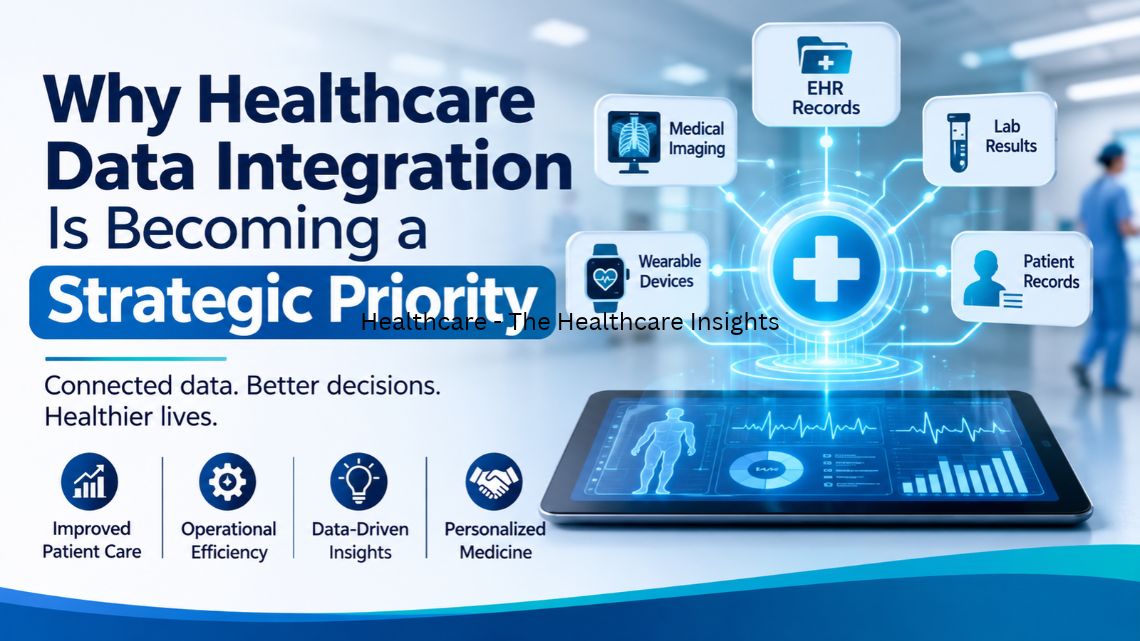
Healthcare data Integration is the process of consolidation of patient data from different isolated sources into one unified system. In healthcare environments, data is often fragmented across various platforms such as EHRs, lab systems, pharmacy, radiology, wearable and billing platforms. A consistent and interconnected information accessibility help eliminate unnecessary delays due to repeated data entry or manual data sharing.
Why Healthcare Data Integration Is Becoming a Strategic Priority
- Breaking Down Data Silos
Healthcare workers are hindered in their ability to obtain necessary information on patients because most systems are conventionally isolated. Integrated systems allow for clinical and administrative information to be connected between departments. Systems that are connected eliminate the need for duplicate entries thus providing their users with a comprehensive view of their patients’ records.
- Improving Clinical Decision-Making
The success of the decision-making process depends on the quality of the information about the patients. Integrated systems permit obtaining all relevant information about the patients including their medical history, laboratory tests, prescriptions, and results of diagnostics. Integrated systems are not a parallel solution to clinical intuition of the doctors but greatly help in making safer decisions.
- Enhancing Operational Efficiency
The process of manual information transfer is too tedious for doctors and administrators. Connected systems facilitate information simultaneously automated information transfer
eliminating redundant documentation and making the clinical registration process effortless. This also helps hospitals to improve their service delivery and concentrate more on patient care.
- Supporting Value-Based Care
Value-based care is the approach which focused on quality, outcomes, and cost reduction. With integrated data, institutional departments and clinicians will be able to access thorough historical records of their patients–previously done treatments, how the treatments work, and what kind of medical care is still necessary.
- Enabling Data-Driven Strategic Decisions
The healthcare Insights identifies that reliable assets are the primary pillar for effective resource utilization. Healthcare leaders need to understand the possibilities of strategic data access. Integrated datasets can help obtain information concerning the patients, treatment procedures, personnel, and performance. Combining this analytics in modern healthcare, enables the leaders to evaluate the problems in areas like service delivery and detect required improvements instead of forming their decisions solely on assumptions.
Best Practices for Building an Effective Healthcare Data Integration Strategy
- Define Clear Business and Clinical Objectives
Recognize problems such as slow information processing, record duplication, and unproductive reporting. Formulate measurable objectives according to medical requirements and business needs. Well-defined goals enable institutions to prioritize spending and analyze results.
- Assess Existing Data Infrastructure
Assess current technologies, applications, databases, and information exchange practices. Spot compatibility bugs, erroneous information, and structural disadvantages. The Healthcare Insights highlights that combining this analysis unlocks the new avenues to smarter digital health trends integration and provides clear direction to achieve it.
- Prioritize Interoperability and Scalable Architecture
Opt for the systems which will allow for effective interoperability now and in the future. Standards like HL7 and FHIR aid the process of systematic data transfer. Scalable architecture will fit future data increase and applications.
- Establish Strong Data Governance
Establish rules of data ownership, accessibility, quality, and responsibility. Create, innovate and user friendly measures to handle bugs and discrepancies. Supervising data processes will ensure effective data flow.
- Strengthen Data Privacy and Security
As healthcare data is highly sensitive in nature, data protection frameworks such as authentications, role-based accessibility, audit trails, encryptions, risk detectors and strong security systems are integral.
- Measure Performance and Continuously Improve
Control issues with data, times of retrieval, errors in the retrieval process, and efficiency of systems and services. Solicit physicians’ opinions regarding problem solving and meet the organizational needs.
Conclusion
In this ever evolving business landscape, digital healthcare data integration has become a strategic fundamental in organizational ecosystems. It is a game changer for establishing unified and consistent data access and exchange. Interoperability, strong governance, and reliable information transferring systems, data integration allow for automated workflows, accelerated decisions, and facilitate value-based care practices. In essence, data integration ultimately facilitate organizations to establish a profound information management foundation that help redefine the DNA of patient centred care.
To read more, visit The Healthcare Insights.
FAQ
What is healthcare data integration and why is it important?
Healthcare data integration is the consolidated integration of data from multiple clinical systems or operational databases into a unified accessibility system. This helps improve healthcare data management, reduce duplication, informed decision-making and leads to enhanced coordination.
What is the role of interoperability standards in healthcare data integration? Interoperability standards allow building common rules for data interchange in healthcare; due to this, the correspondence of different applications to the typical methods of data integration is increasing.
What are the challenges to strategic healthcare data integration?
One of the obstacles that should be solved during the process is that there are a huge number of old systems, formats that are incompatible with one another; and such difficulties as cybersecurity exposure and implementation costs are also very common.