
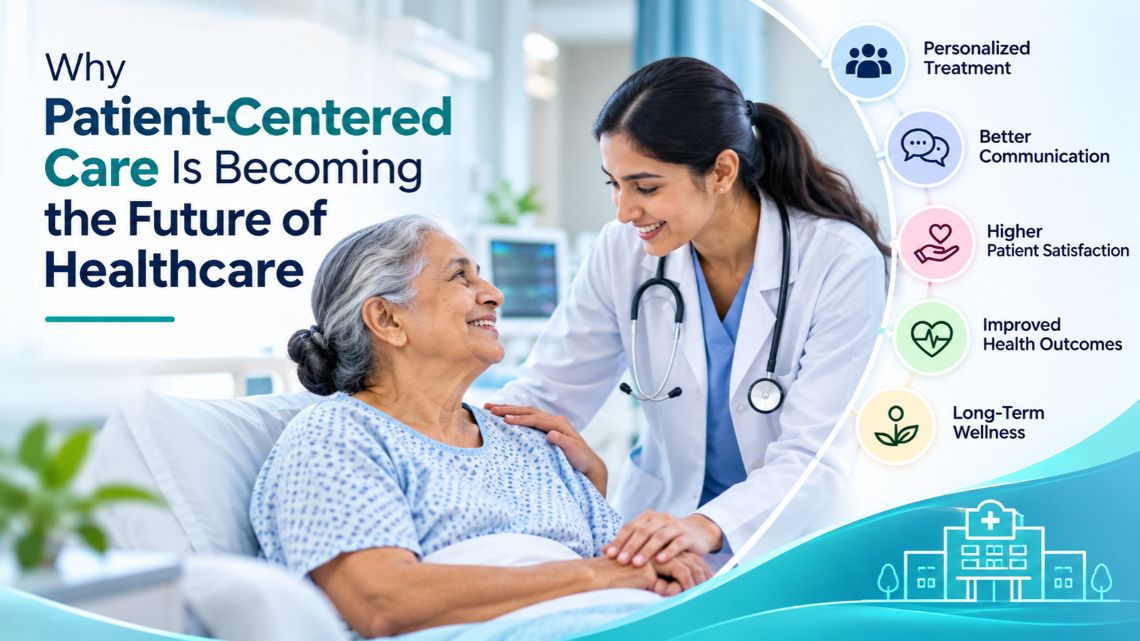
For decades, healthcare domain has operated in a lens of transaction-based episodic care relationships; whilst patient centered care is a collaborative core framework that drive financial sustainability, customer loyalty and better clinical outcomes in this modern care delivery ecosystem. In contrast to traditional systems, patient centered care approach facilitates informed organizational changes, which help healthcare organizations navigate from conversation-based understanding to operations based on what really matters to their prospective customers. It involves direct customer involvement, personalization, continuity of care, beyond hospital visits. In Beryl Institute’s 2022 survey, unsatisfied experience compared to personalized experience from other sectors, it has found that over 60% of Americans had Patient centered care is no longer a buzzword, it is becoming an integral foundation for value aligned care delivery, cost management, and patient retention.
What Is Patient-Centered Care?
Patient-centered care is a concept care delivery concept that deliberately focused on collaborative partnership between patients, providers and stakeholders to develop an operational approach that matches their expectations, values, needs and create a respectful responsiveness.
The four core pillars.
• Respect and dignity
• Information sharing
• Participation
• Collaboration
The Key Pillars Accelerating the Shift Toward Patient-Centered Care
The healthcare Insights identifies that there are four micro forces predominantly enabling this transformative shift in the health domain, including:
- The Transition to Value-Based Care Reimbursement
Beyond the conventional fee-for-service care models, the transition toward value based care (VBC) models are transforming the trajectory of how organizations perceived financial management and care delivery. The approach aligns treatment outcome, safety and patient satisfaction within health systems. Ultimately, the objective is to provide a trustworthy modern healthcare system that considers patient limitations, and facilitate smooth care transitions, and informed operational delivery without compromising financial goals.
- The Rise of Healthcare Consumerism
In this modern age, patients are becoming more research driven and able to analyze companies, and evaluate public reviews. They expect fair pricing, and a comfort similar to shopping experiences in other sectors of business. Online appointment booking, effective communication, and prompt services change the selection process. Companies that turn a blind eye to patients’ expectations may lose them to their rivals who can meet them.
- Chronic Disease Epidemic and Aging Population
In the reality of multimorbidity, managing symptom alone is insufficient. PPC focused care delivery aggregates empathy and respect and empowering decisions with continuous partnership support. This indirectly accelerates retention, improves treatment adherence rate and help people reduce the uncertainty regarding systemic limitations. More evidently, the improved accessibility and transparency in care delivery experiences help them timely communicate their health concerns and take the responsivity of continuous health management. A respectful and value-based care delivery will make patients more confident and emotionally stable. Effective care coordination leads to less duplication of tests, contrary information being given, and potentially preventable complications, thus a care model grounded in individual patient needs will be more likely to cultivate long term gains.
- Digital Health Technology as an Enabler
Service providers benefit from stronger loyalty, better word of mouth referrals, and improved image, with improved performance in terms of value-based contracts. Improved compliance and early help may lead to reduced emergency room visits and re-hospitalizations and thus lower expenses. Besides better communication and collaborative workflows help avoid costly adjustments in advance.
The Tangible Benefits of a Patient-First Approach
1. For Patients (Clinical and Emotional Outcomes)
Tailored patient care enables patient empowerment, enhanced whole person dignity, and help lower treatment related anxiety. This indirectly accelerates retention, improves treatment adherence rate and help people reduce the uncertainty regarding systemic limitations. More evidently, the improved accessibility and transparency in care delivery experiences help them timely communicate their health concerns and take the responsivity of continuous health management. A respectful and value based care delivery will make patients more confident and emotionally stable. Effective care coordination leads to less duplication of tests, contrary information being given, and potentially preventable complications, thus a care model grounded in individual patient needs will be more likely to cultivate long term gains.
2. For Healthcare Providers and Systems
Service providers benefit from stronger loyalty, better word of mouth referrals, and improved image, with improved performance in terms of value-based contracts. Improved treatment compliance, streamlined disease management, fewer redundant tests, etc. provides optimized institutional management while reducing the organizational expenditures. Besides better communication and collaborative workflows help avoid costly adjustments in advance.
Conclusion
The unprecedented shift toward patient centered care illustrates the impact of technology advancements in modern medicine, changing customer demands, disease trends and payment models. Care models focused on volume-based reimbursement cannot integrate deep human expectations. Whilst, the deployment of scalable technologies across clinical workflows help organizations improve the quality of patient experience, enhance authoritative presence and create better care delivery outcomes, contributing to increased financial stability. Patient centered care provides significantly benefits patients, as this practice involves allocating what effective to them, their preferences and ultimately cultivating long term loyalty. Businesses that considers respectful communications, direct patient contribution, and financial optimization will define the direction for successful future.
To read more, visit The Healthcare Insights.
FAQs
How does patient-centered care improve patient outcomes?
In the future of health care, PCC primarily support institutions transition from the paradigm of treating a person for disease condition and integrating all the biopsychosocial factors. It transforms the limitations of conventional systems. As the approach is more value aligned and anchored in patient needs, it support effective treatment management—improved treatment adherence, risk control, accuracy and safety.
What is patient-centered care in healthcare?
PPC is a healthcare approach grounded in adherence to active and systematic partnerships and collaborations with patients and care providers in order to generate a respectful and value based system. It help reduces clinical and operational errors, avoid duplications, and complications in early stage.
What are the main challenges of implementing patient-centered care?
The undetectable data silos, usage of legacy scheduling, the institutional resistance from fee-based service system, lack of digital literacy and financial instability are significant barriers to successful implementation of patient centered model.
To read more, visit The Healthcare Insights.