
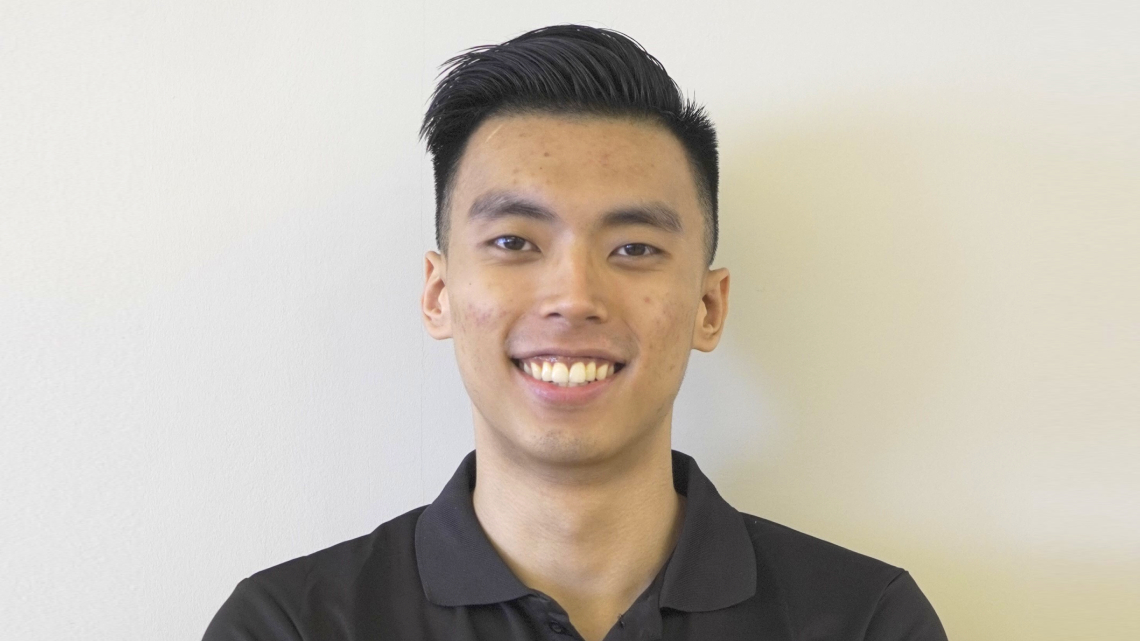
Windsor Ongchan, Founder and CEO, Bulletproof Recovery + Performance
For too long, injured athletes and active individuals in the Philippines found themselves trapped in an exhausting loop. On one side stood traditional rehabilitation clinics reliant on passive modalities—heat packs, rest, and hasty visits where treatment ended the moment pain subsided. On the other side stood commercial gyms, where workout routines resumed with little understanding of the underlying injury. The result was a frustrating revolving door: individuals felt temporarily better, returned to their sport or daily life, and promptly broke down again.
In 2024, Founder and CEO Windsor Ongchan set out to break that cycle, founding Bulletproof Recovery + Performance. Later incorporated as BP Performance Inc. in 2025, the company was built around a singular commitment: closing the dangerous gap between clinical rehabilitation and athletic performance under one roof.
“Bulletproof began out of a frustration I could not shake,” reflects Ongchan. “In the Philippines, injured athletes and active people were passed between two worlds that rarely spoke to each other. We wanted one roof where licensed physical therapists and strength coaches work from the same assessment, the same data, and the same plan, taking a client from the treatment table all the way back to full performance.”
Today, guided by Ongchan alongside clinical leads in Physical Therapy, Rehabilitation Medicine, and Strength & Conditioning, the multidisciplinary team delivers care across its facilities and online via bulletproofph.com.
Redefining ‘Bulletproof’: Capacity Over Comfort
While the name Bulletproof might sound like a promise of invincibility, the clinic’s philosophy is rooted in a much more practical reality.
“Bulletproof is often misread as a promise of invincibility,” explains Ongchan. “For us, it means the opposite of fragile: resilient, prepared, and hard to break because the body has been progressively exposed to the demands it will actually face. Our philosophy is that recovery is not the absence of pain; it is the presence of capacity. A knee is not rehabilitated because it no longer hurts, but because it can absorb force, change direction, and be trusted under fatigue.”
At Bulletproof, a knee is not considered rehabilitated simply because it no longer aches on the stairs. Consequently, the team’s discharge standard is never just “pain-free”; it is performance-ready.
One Roof, One System: A Seamless Ecosystem of Care
Rather than treating medicine, movement, and strength as separate silos, Bulletproof operates as an integrated ecosystem where specialists share a single floor, a single assessment, and a unified client record.
“What sets us apart from conventional practice is integration,” Ongchan notes. “There is no cliff between being ‘discharged from therapy’ and being ‘safe to train.'”
This care pathway spans four interconnected pillars. It begins with Bulletproof Medical, where rehabilitation medicine physicians conduct comprehensive consultations to rule out critical red flags, diagnose underlying tissue issues, and establish an initial roadmap.
Clients then transition into Bulletproof Movement, working one-on-one with PRC-licensed Physical Therapists in unhurried 90-minute sessions. Here, hands-on recovery tools—including dry needling, cupping, soft tissue blading, percussive therapy, and pneumatic compression—are combined with targeted active exercise. As healing progresses, Bulletproof Performance takes center stage: sports scientists and strength coaches program sport-specific conditioning to rebuild weak links so injuries do not recur. To support overall health, the facility also offers Bulletproof Slim, a physician-led weight management program combining doctor-screened treatments with strength training to ensure weight loss selectively targets fat while preserving vital lean muscle mass.
Data Over Dogma: Proving the Path to Recovery
At the heart of Bulletproof’s clinical decisions is a strict adherence to current scientific literature rather than legacy habits. Assessments drive decisions, and objective testing drives every progression.
Consider the journey of a 29-year-old competitive athlete who entered the clinic two years after ACL reconstruction. Though cleared of pain by conventional standards, detailed movement and force diagnostics revealed a staggering 50 percent quadriceps strength deficit on his operated leg alongside a deep-seated fear of re-injury.
Instead of repeating generic knee exercises, physical therapists and strength coaches constructed a milestone-based roadmap. Together, they systematically restored strength symmetry, rebuilt plyometric competency, and introduced graded change-of-direction drills under simulated fatigue. Five months later, the athlete returned to full competition, testing stronger and more capable on his operated leg than he had been before the injury.
A Shared Standard: Building Physical Resilience
Operating out of its flagship facility in Rooms 417–422 of the P&S Building along 717 Aurora Blvd. in New Manila, Quezon City—located directly across from Robinsons Magnolia—and a dedicated rehabilitation branch in Mendiola, Manila, Bulletproof has cultivated a flat clinical culture where no single individual owns the standard of care.
“Our culture is built on the idea that the standard of care is a team possession—no single person owns it, and everyone protects it,” says Ongchan. Physical therapists, physicians, and strength coaches collaborate openly, debate clinical reasoning, and regularly present new research during team case reviews.
Through this transparent, evidence-led approach, BP Performance Inc. aims to make integrated rehabilitation-to-performance care the benchmark across the Philippines.
“Our ambition for the coming years is to make integrated rehabilitation-to-performance care the expectation in the Philippines, not the exception,” Ongchan emphasizes. Through expanding institutional partnerships with academic bodies, sports organizations, and fitness communities, the team continues to ensure that when anyone completes rehabilitation, they leave healed, empowered, and far more resilient than when they walked in.