
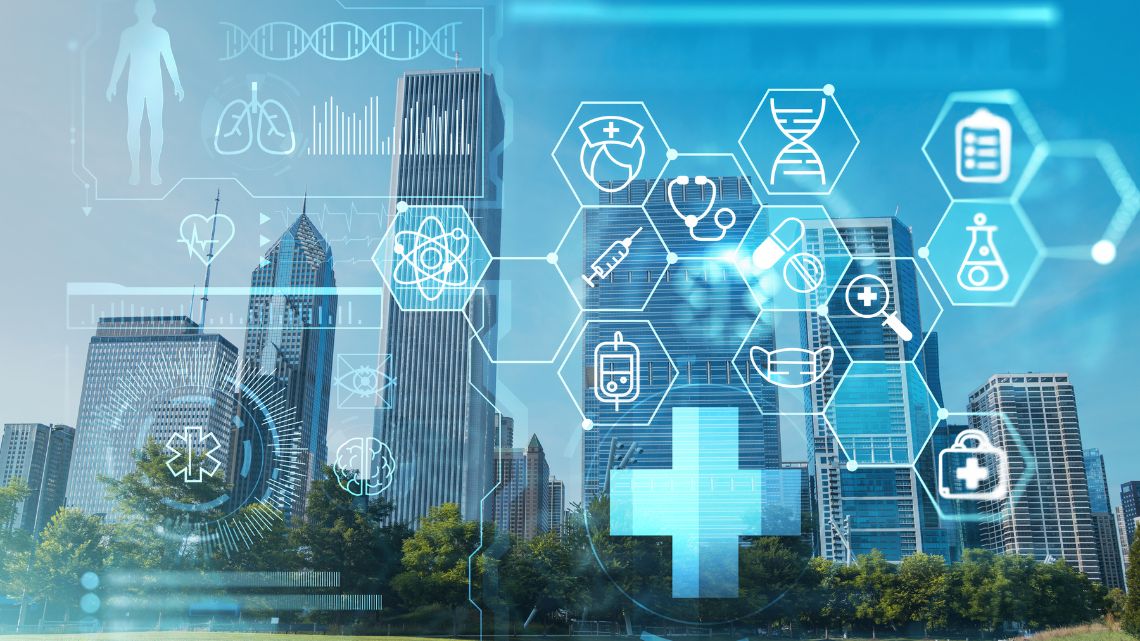
The healthcare landscape has drastically changed from a traditionally hospital-driven sector to one that is confined in data-driven, connected systems, powered by smart technology; continuous advancement in technology has significantly redefined care delivery and access. Technology is bridging the gaps of efficiency and availability in parallel with the rising expectation shifts, personalized services and faster care delivery. This blog provides an overview of how the ongoing digital revolution is now changing the medical industry and enabling a modern and forward-thinking healthcare system through the integration of intelligent technology solutions.
Key Technologies Transforming the Medical Field
- Electronic Health Records (EHRs)
The revolution of Electronic Health Records in the domain of healthcare has marked new possibilities for patient data storage, assessment and transfer. EHRs including medical history, diagnosis, drug regimen, and test results, enabled a transition toward a paperless system that is much more comprehensive. The use of electronic health record systems for easy transfer of data between departments, which helps to improve care coordination and decrease the likelihood of errors. Additionally, the use of electronic records streamlines routine administrative work and allows for quicker decision-making, making EHRs much more efficient than manually documented methods.
- Artificial Intelligence and Machine Learning
Artificial Intelligence (AI) and machine learning in the healthcare industry enabled more accurate, accelerated diagnosis in clinical setting as well as remotely. These technologies utilize large amounts of medical data to help identify patterns and make predictions regarding the likelihood of future events. AI is also being used in other specialties such as radiology, pathology, telemedicine and drug development to provide better diagnostic and treatment recommendations for patients. Additionally, AI is leveraged as a system for clinical decision in order to assist providers with determining the ideal treatment plan for their patients.
- Wearable Devices and Remote Monitoring
Wearable technology represents one way preventive care can be improved through new options. The popular Apple Watch with its ability to track vital signs (heart rate, activity level, etc.) continuously over time, provides healthcare providers with an opportunity to identify early signs of problems. Remote monitoring may be very beneficial when taking care of patients with chronic illness, as it allows for observation of patient status in real-time, eliminating unnecessary visits to healthcare settings for managed chronic illness.
Use of Robotics and Automation
- Robotics and Automation
Robotics propels healthcare into the future. Particularly in surgical procedures, the use of systems like the da Vinci Surgical System that enable surgeons to perform more precise and less invasive surgical operations, resulting in fewer complications, less recovery time, and better outcomes for patients. In addition, automation of laboratory and administrative functions can also be accomplished by the use of robotics to reduce errors and improve efficiency in the delivery of care.
- Big Data and Predictive Analytics
The healthcare industry generates large volumes of data on a daily basis. Through the use of predictive analytics and big data, healthcare providers can begin to gain insight into patterns, treatment effectiveness, and other areas that will improve delivery of healthcare services. Additionally, predictive models help identify low-income patients to provide early intervention for patients classified as higher risk. A predictive analytics approach to population health management provides improved overall healthcare delivery to support population health management.
- Cloud Computing in Healthcare
Due to the advent of cloud computing, the manner in which healthcare organizations are able to store and manage data has been drastically altered. Healthcare organizations can take advantage of the securely hosted, highly scalable, and relatively cost efficient cloud solutions for the management of massive data volumes. Having access to such technological convenience can help improve the efficiency of patient collaboration—remote patient care—irrespective of considering their physical location, resulting in holistic care efficiency and enhanced continuity to care.
Challenges and Considerations
- Data Privacy and Security
As an increasing number of companies adopt digital solutions, there is now greater emphasis placed upon the protection of the data nestled in these digital solutions. A critical aspect of ensuring a company has implemented effective healthcare cybersecurity measures in the protection of patient data is to provide every company security and maintain compliance. Breaching of data occurs often and typically comes at great expense; therefore, securing patient-related information against unauthorized disclosure is vital.
- Integration and Interoperability
It is believed that most of the issues related to technological advances or use in the healthcare industry come from the inability of standalone systems to work together effectively. Interoperability between healthcare systems must be standardized in order for digital health technology to deliver optimal results. The implementation of standardized communication protocols among digital health solutions will help provide seamless integration between digital healthcare solutions.
- Adoption and Training
Company employees will likely have challenges in making the transition—usage and acceptance of advanced process changes—signaling a need for continuous education and practice utilizing new tech integrations. Therefore, successful implementation of digital health technology without an extensive period of continued training is necessary for enhancing operational efficiency.
- Ethical and Regulatory Concerns
The development of AI and the use of AI in the healthcare industry raise many ethical and regulatory questions. Problems related to data ownership, transparency of algorithms, and patient consent must be addressed thoroughly prior to AI being introduced to the healthcare industry. The continued use of technology within the healthcare system ethically would strive to establish trust in the systems themselves.
Conclusion
The continuous adoption of technology and innovation in the healthcare sector have significantly helped surpass the leading challenges and inefficiencies. With these implementations, providers are enabling more intelligent and connected healthcare systems that have a focus on improving quality of care, increasing accessibility and services that support healthy living.
To read more, visit The Healthcare Insights.