
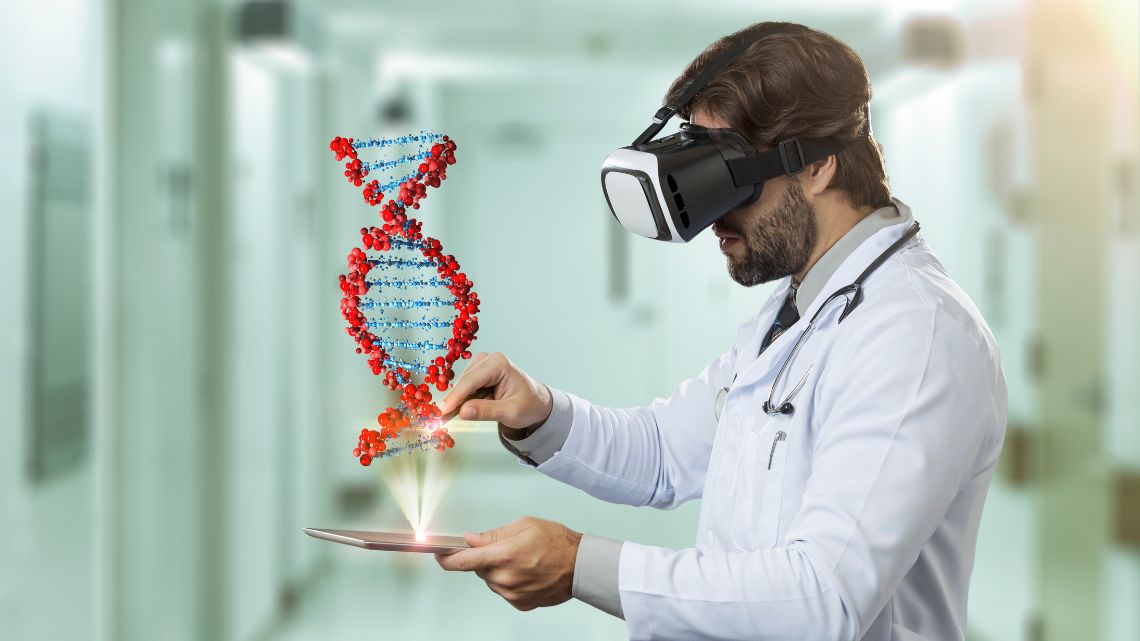
Rapid advances in health care have accelerated a significant shift towards personalized, precision-driven health care for patients using Genomic Medicine. Precision medicine incorporates the use of genomic insights in diagnostics, therapeutics (the study of effective treatments), and preventive medicine to provide improved, accurate, and efficient interventions to patients. Technological inventions such as genomic sequencing, AI technology, and bioinformatics have significantly improved the rate of genomic testing and development integrations within the applications of modern health care system, enabling earlier disease diagnoses, enhanced treatment outcomes, and more efficient clinical decisions.
What Is Genomic Medicine?
Genomic medicine is an advanced medical discipline in which genetic information is derived from an individual’s genome (entire set of DNA in a cell) in order to streamline clinical decisions, disease prevention, and strategic treatment planning. There is a range of disease conditions, like type 2 diabetes and rare disorders that are genetically inherited. By genomic medicine, physicians can identify the dimensions of how it develops, presents, and responds to treatment and therefore significantly transform the patient condition.
While genetics centers on the medical science of individual genes and their direct inherited effects. Genomics is broader—it examines the complete set of DNA in a person’s cell, including how the base pairs affect biological functions and disease susceptibility and how the environment modifies gene expression. This makes genomics a more advanced vertical for transitioning into everyday clinical practice.
The human genome and personalized care
The variations in a single DNA base pair encoding the 20,000 to 25,000 genes can translate to nucleotide differences to larger structural changes, causing effects across drug metabolism, treatment response, and disease susceptibility. Understanding these variations at scale is the foundation of truly personalized medicine.
Genomic medicine doesn’t replace clinical judgment—it facilitates that judgment with a view into the biological code underlying each patient’s condition.
Core Technologies Powering Genomic Medicine
As technologies in healthcare are continuously upgraded, their cumulative effect is expanding the effectiveness of genomic medicine. The current technological pillars that underpin this field’s current momentum are:
- Genome Sequencing Technologies
Next-generation sequencing (NGS) has significantly reduced expenditures of whole genome sequencing (WGS) from millions to an accessible pricing level today. WGS helps determine the order of most nucleotides in the genome and utilizes that encoded information to identify unique genetic fingerprints. Rapid, high-accuracy sequencing at clinical scale unlocked the potential to screen tumor profiles even in a newborn.
- Artificial Intelligence and Genomic Analytics
Machine learning models are being used beyond the norms of EHR to help researchers identify pathogenic variants, predict drug response, and flag polygenic risk patterns that no human analyst could detect in a reasonable time. AI in healthcare doesn’t replace genomic expertise — it scales it, making interpretation feasible at population level.
Machine learning algorithms are compounding AI efficiencies by improving drug discovery, personalized treatment recommendations, and genomic information analysis at scale. This integration makes possibilities for economic medicine more scalable, precise, and operationally efficient.
- CRISPR and Gene Editing Innovations
CRISPR-Cas9 and its successors (base editors, prime editors) are redefining the domain of gene therapy for inherited diseases. They enable scientists to make targeted modifications on specific DNA sequences with advanced precision. Many clinical developments are underway for the development of genetically trasmuted conditions and diseases like sickle cell anemia, beta-thalassemia, and cancers.
The interaction between these three areas is particularly significant. Sequencing generates the data; AI makes it interpretable; gene editing offers the possibility of directly acting on what’s found. That closed loop—from insight to intervention—is what distinguishes genomic medicine from any previous era of biological science.
Applications of Genomic Medicine in Modern Health Care
- Precision Medicine and Personalized Treatment
“Pharmacogenomics”—a precision-driven clinical study of genetically inherited disease profiles. Leveraging this, physicians can evaluate a patient’s biology such as effect on metabolism, reaction efficiency, and risk for side effects, allowing them to develop a highly personalized treatment plan that reduces recovery time. This support overcomes trial and error and helps doctors prescribe safer and more tailored medication strategies.
- Oncology and Cancer Genomics
Tumor sequencing is one of the standalone techniques to identify cancer mutations and design effective therapies. Selecting treatments that target specific molecular pathways and cancer growth, genomic insights significantly refine how oncology therapies are commercialized.
- Rare and Inherited Disease Management
Through genomic testing, the patients are now relieved from the persistent diagnostic uncertainty. Whole genome sequencing helps detect the causative variants in a very short time span. The convenience of enabling family counseling for effective treatment management and access to targeted therapies are game changers in healthcare.
- Cardiovascular and Neurological Applications
Inherited cardiac conditions and neurological subtypes can be reclassified using genomic lenses. This helps family screening and trial eligibility based on molecular profile rather than merely the symptom identifications.
- Infectious Disease Surveillance and Response
The pandemic of the Covid-19 outbreak has validated that pathogen genomics can track transmission chains and emerging variants in near real time. Genomic surveillance is now being integrated for vaccine development, ensuring public health responsibilities, routine surveillance, and antimicrobial resistance programs.
Operational Advantages on Health Care
- Enhanced diagnosis precision
- Improved disease management
- preventive health care
- Personalized treatment
Conclusion
From the provision of personalized treatments to early detection and gene mutation for chronic inherited diseases, genomic medicine is reshaping how healthcare is perceived and utilized in the future. The ongoing developments in numerous fields, such as next-generation sequencing, artificial intelligence (AI), and genome editing techniques, are facilitating increased operational efficiency and delivery of clinical care, leading to quality, patient-focused, and evidence-based care in the future.
For more articles, visit The Healthcare Insights.